
Tolkien's Saddest Scene Has No Villain in It
, 5 min read
How the scene Tolkien called his most tragic taught me to read for people, and led me from The Lord of the Rings to Malazan and Stormlight.
Gollum comes back to the stairs and finds the two hobbits asleep. Frodo is lying with his head in Sam's lap, and for a moment, looking at them, Gollum stops looking like a monster. Tolkien describes him as an old, tired hobbit, worn down by years he was never meant to live. He reaches out a shaking hand and touches Frodo's knee, and the touch is almost gentle.
Then Sam wakes up. He sees Gollum pawing at his master and demands to know where he's been sneaking off to. Gollum pulls back, the green light returns to his eyes, and the moment is gone. A few chapters later he leads them into Shelob's lair.
Tolkien thought this was the most tragic moment in the whole book. He said so in a letter, and in a BBC interview in 1968 he put it more plainly. Sam, in his protectiveness, defeats Gollum's repentance, and Tolkien thought that was very true to life.
Sam is the most loyal character in the story, and he is also the reason Gollum never comes back. Of everything in those three books, the war, the deaths, the Ring itself, Tolkien chose a good person doing the loyal thing at the worst possible moment. That is an author who actually sees and knows the people he is writing about. I didn't have the words for it at sixteen, but it is what I have been reading for ever since.
A film, a friend and very small print
I came to The Lord of the Rings through Peter Jackson, like a lot of people my age. Alex, my best friend since LKG, bought the book after the film, read it, and passed it on to me. In 11th standard I was squinting at the tiny print of a three-in-one edition.
What got me first wasn't the scale. Frodo never wanted any of it. At the Council of Elrond, with everyone arguing over what to do with the Ring, he says he will take it, though he does not know the way. He was doing it for everyone else, and I was part of everyone else. I could picture myself as one of the people he had decided to save.
If I'm honest, the version in my head for years was the film's, with "to Mordor" on the end and Aragorn, Legolas and Gimli offering a sword, a bow and an axe. None of that is in the book. It's still a good scene.
For a long time The Lord of the Rings was the best epic fantasy I knew. Then I started buying books by weight.
Book seven by accident
In 2008 I was just out of college and royally broke, and I chose books by how many pages I got for the rupee. Reaper's Gale, by a Canadian I had never heard of called Steven Erikson, won on thickness. I was about two hundred pages in before I worked out it was the seventh book of a series called the Malazan Book of the Fallen.
I went back and bought the rest. The last couple I pre-ordered from the UK and had friends carry into the country in their luggage. The series ended with The Crippled God in 2011, and by then The Lord of the Rings had become my second favourite.
Malazan is hard to read. There is no hand-holding and nobody stops to explain how the world works. Erikson trained as an archaeologist and an anthropologist, and the world feels dug up rather than made up. People die. People live. People ascend. There are gods, older gods, and people who used to be people.
What kept me was the people. Almost anyone in it could carry a trilogy of their own. The marines alone have call-signs like Throatslitter, Deadsmell and Smiles, and those are the small names. Their motives are seldom selfish, and they are funny, which I didn't expect from books this heavy.
You pick your favourites. Your heart gets broken. Beak.
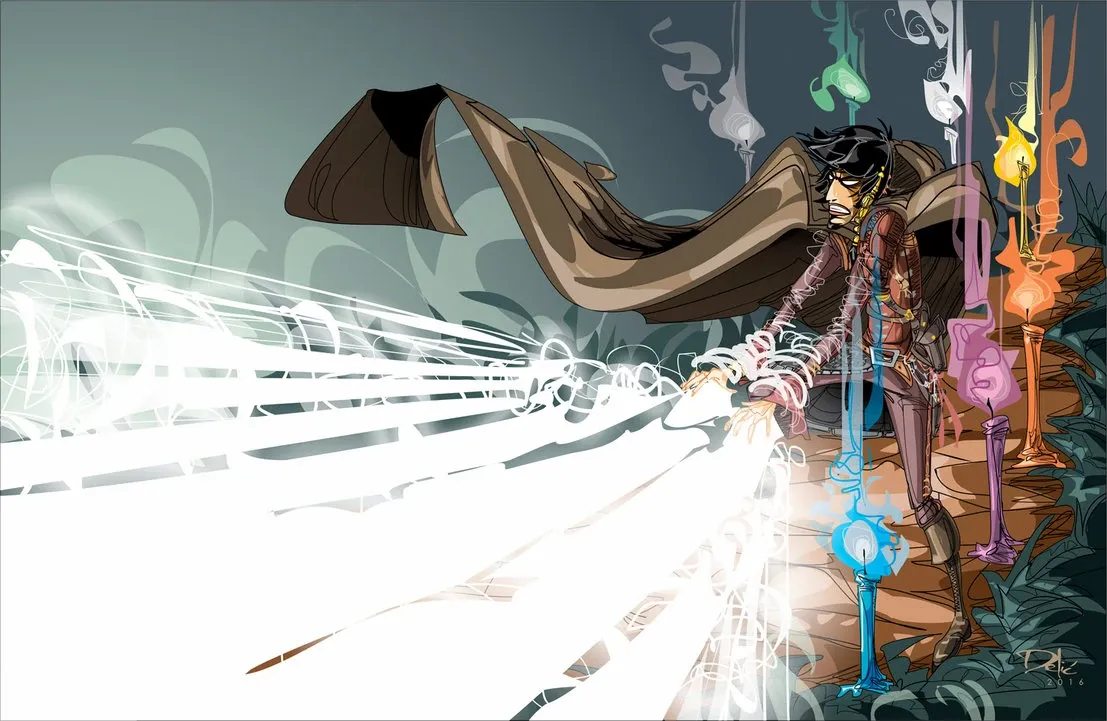
Beak was a child. Not in years. He knew he was thirty-six, because it was six years after he turned thirty. He was a runt of a mage from a family of horse breeders, a skilled rider, and a boy who had been hurt by the people who should have looked after him. He could smell magic, and he thought of his own as candles. Every time he appears he is small, at the edge of things, always childlike. Then the moment came to protect his friends, eight hundred marines under a sorcerous attack, and he lit every candle he had at once. When the Edur warriors they had come to fight were caught in the same attack, Fiddler waved them in and Beak stretched the shield over them too. He died, and burned so hard that the ground there never held magic again. Hood, the god of death himself, came to meet him and sent him on to his brother. The marines built a barrow over him from whatever they had on them: buckles, coins, broken weapons, and one sergeant's flask.
He is in Reaper's Gale, the book I bought for its thickness. I still can't write about him without my eyes going.
Fiddler is my other favourite, and he's nothing like Beak. He is the calm in the freaking storm, an old sapper who isn't afraid to tell Whiskeyjack, his old commander, what to do. He hates his own sword and keeps leaving it behind. After he leaves it lying in a puddle once, his general watches him run back for it and says, "The man's a hopeless legend." I can't remember him doing anything overly heroic. When a boy points a human bone at a new army on its first muster, the worst omen a nervous army could get, it's Fiddler's idea to make the bones their symbol, and they wear them from then on. He holds it all together. Fiddler is us.
Erikson wrote those ten books in twelve years, close to one enormous novel a year. He has said since that he couldn't keep that pace up again, and his later books have come years apart. I have not heard a Malazan reader complain.
The one that came after
After Malazan, the only series that did the same thing to me was Brandon Sanderson's Stormlight Archive. The magic is louder, the people are easier to rally behind, and its hero, like Frodo, is reluctant and fighting for everyone.
Everyone
Frodo took the Ring for everyone. Almost ten thousand pages into Malazan, near the end of The Crippled God, the marines are hiding among the stones of a barrow in the dark when someone asks who they're fighting for again. Fiddler can't place the voice that answers. "Everyone."
There is a long pause, and then someone says, "No wonder we're losing."
Somebody snorts. Somebody else starts laughing, and then all at once, from every dark corner of that barrow, the marines are laughing with him.